
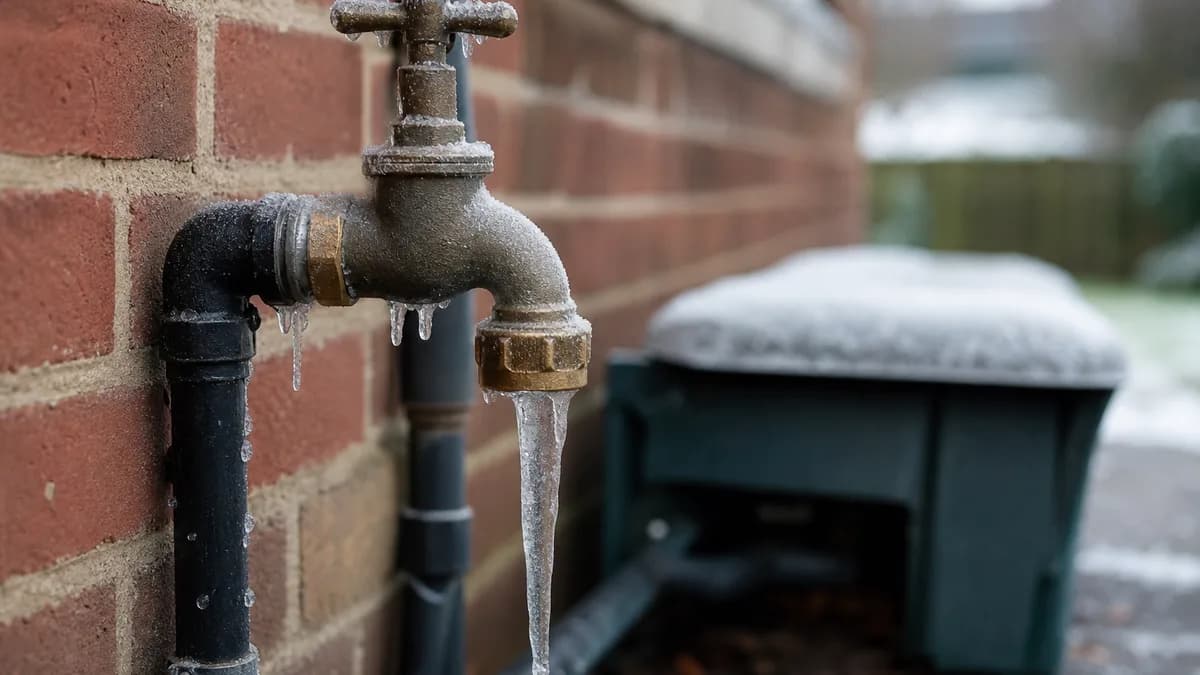
Frozen Pipes: Immediate Steps to Limit Damage
Published by PHD24 · UK plumbing, heating and drainage guidance
A frozen pipe may have split even if no water is visible. Isolate the supply before thawing so damage is limited when the ice melts.
Understanding the system shows which observations matter and where DIY should stop. The aim is not to turn every homeowner into an engineer, but to help you describe the installation clearly and make a proportionate next decision.
How to use this information
Pipe condition depends on material, age, water chemistry, loading and installation quality. Colour or age alone does not prove that an entire system needs replacement; the decision should be based on leaks, corrosion, flow, contamination risk and accessibility.
Safe thawing steps
- Close the stopcock and open the affected tap. Operate it gently and confirm that flow actually stops; a seized or passing valve should be repaired under controlled conditions, not forced during an emergency.
- Inspect the accessible run for bulges, cracks and pushed joints. Recurring symptoms need structural evidence. A CCTV survey can locate joints, deformation and root entry so clearing and repair are not confused.
- Warm the area gradually with room heat, warm towels or a hairdryer on a low setting. Identify the pipe's duty and material first, and inspect adjacent joints and supports so the work does not move stress to the next weak point.
- Work from the outlet back towards the frozen section.
- Restore water slowly and watch the full pipe run for leaks. Dry the area first, then check it again under normal operating conditions. The timing and first point of fresh moisture are more useful than the final spread of the stain.
How to assess your own system
- Check the route for frost exposure, impact, vibration or contact with incompatible materials.
- Record pipe material and size where visible, but do not disturb suspected lead, asbestos-containing insulation or damaged electrics.
- Plan replacement by circuit or route so new work resolves the weakness and remains accessible.
- Identify what the pipe carries and how it can be isolated before touching insulation or fittings.
- Inspect accessible joints, supports and transitions for corrosion, staining, movement and previous repairs.
Common mistakes to avoid
- Covering a suspect joint before it has been pressure-tested and observed.
- Assuming a temporary clamp or tape is a permanent pressurised-pipe repair.
- Judging concealed pipework solely from one visible section.
- Heating a frozen pipe with a naked flame or high-temperature tool.
UK context and safety
Never use a blowtorch, naked flame or boiling water. Keep electrical appliances away from moisture.
Confirm the service before cutting or heating any pipe. Gas work is restricted to appropriately qualified Gas Safe registered engineers, and suspected lead pipework should be handled with suitable hygiene controls and replaced rather than repeatedly disturbed. If pipe insulation or adjacent material may contain asbestos, stop and obtain specialist advice.
Prevention and ongoing care
A little planned care usually provides more value than repeated emergency intervention.
- Investigate discoloured water, repeated pinholes or unexplained pressure loss promptly.
- Photograph pipe routes before floors or walls are closed.
- Coordinate private supply-pipe work with the water company where ownership changes at the boundary.
- Insulate vulnerable water pipes and remove draughts without blocking required ventilation.
When to call PHD24
If the pipe is inaccessible, split or leaking, call PHD24 for urgent help.
A pipework survey should identify material, duty, route and failure pattern before proposing spot repair or replacement. PHD24 can then explain what can remain, what should be renewed and how isolation, access and making good affect the scope.
Call promptly if water cannot be isolated, wastewater is entering the property, heat or hot water has failed in vulnerable circumstances, or the fault involves gas, wet electrics or a risk to the building. For a non-urgent visit, photographs and a short history help PHD24 plan the right first attendance.
Frequently asked questions
Can I deal with this myself?
Low-risk observation and temporary isolation are useful, but cutting unknown pipework, heating frozen pipes aggressively or disturbing lead and gas services is unsafe.
What information helps before an engineer visits?
Photograph visible material and joints and note what the pipe serves, its approximate route, the isolation available and when the symptom began.
Does American plumbing advice apply directly in the UK?
Not without checking it carefully. UK terminology, Building Regulations, water-company responsibilities, Gas Safe requirements and common system designs differ from US practice. Follow current guidance for the relevant UK nation and the equipment actually installed.