
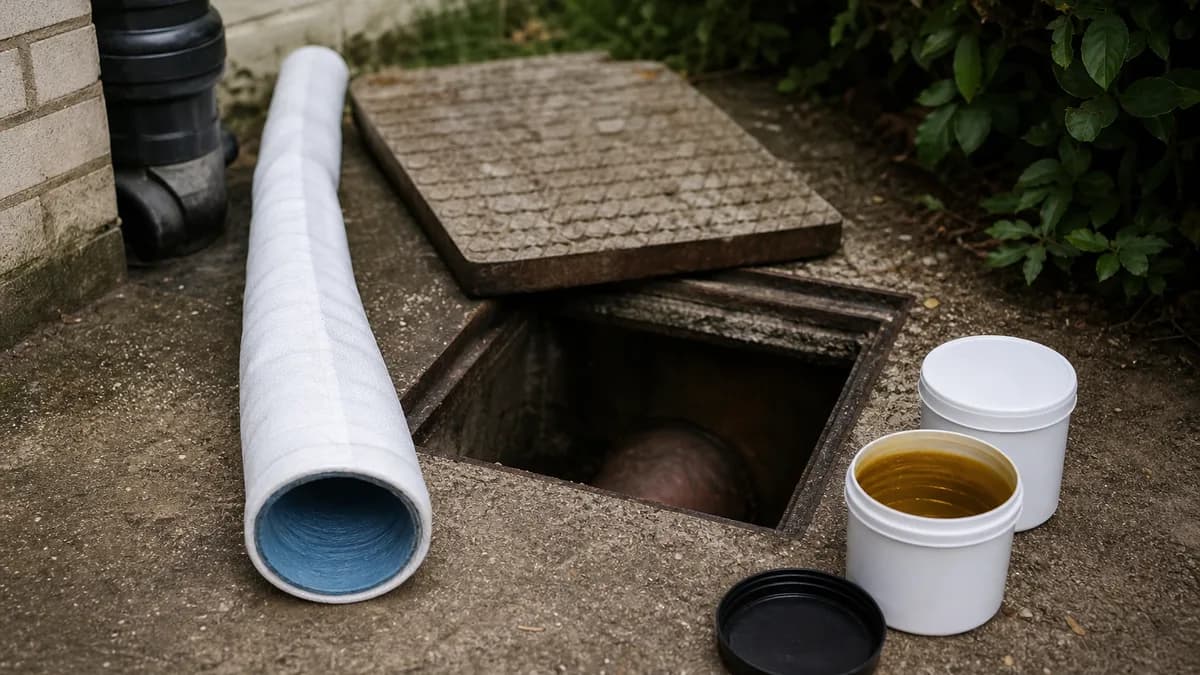
Four No-Dig Ways to Line and Repair Cracked Drains
Published by PHD24 · UK plumbing, heating and drainage guidance
Drain lining creates a new watertight surface inside an existing pipe. The correct system depends on defect length, diameter, access, connections and pipe condition.
A safe job starts with isolation and a recovery plan before any tool is used. Confirm that the task is genuinely within normal user maintenance, have the correct parts ready and stop if the installation differs from the expected layout.
Prepare before you start
Underground drainage is hidden, so a good diagnosis works from evidence: flow tests, inspection chambers where safe to access, the history of previous blockages and, when necessary, a CCTV survey. Clearing flow without understanding a recurring fault can leave the underlying defect untouched.
Four common lining approaches
- Local patch lining for an isolated crack or displaced joint. Recurring symptoms need structural evidence. A CCTV survey can locate joints, deformation and root entry so clearing and repair are not confused.
- Cured-in-place full-length lining for a longer defective section. Note which fixtures are affected and whether the result lasts. That evidence indicates whether the action addressed the cause or only moved the restriction.
- Inversion lining, installed by turning a resin liner into the host pipe.
- Pull-in-place lining where access and control favour drawing the liner through.
A practical, safety-first sequence
- Ask whether neighbours have symptoms too, because a shared or public sewer fault may need the sewerage company.
- Record odours, noises, water levels and the weather conditions instead of repeatedly forcing water through the system.
- Use only a simple, non-destructive first measure that suits the fitting, and stop if it does not improve flow promptly.
- For recurring faults, request diagnosis such as CCTV or root-cause testing before agreeing to excavation or lining.
- Stop using the affected fittings if water is rising, sewage is escaping or continued use could flood the property.
Common mistakes to avoid
- Mixing different drain chemicals or using chemicals after a product has already failed.
- Continuing to flush toilets or run appliances while wastewater is backing up.
- Assuming every pipe within the garden is privately owned without checking the drainage layout.
- Treating repeated clearing as a permanent repair when roots, displacement or collapse may be present.
UK context and safety
A liner cannot correct every collapse, severe deformation or poor gradient. The pipe must be cleaned, surveyed and prepared before installation.
Wastewater can contain harmful microorganisms. Keep children and pets away, avoid direct contact, ventilate the area and wash thoroughly after any minor clean-up. Never enter a drain, sewer or confined chamber. Ownership also matters in England and Wales: the sewerage company usually maintains public sewers and many lateral drains, while the property owner is normally responsible for a drain serving only that property within its boundary.
Prevention and ongoing care
A repair is more durable when the surrounding causes and future access are considered as part of the job.
- Retain survey footage and repair records so later contractors can compare changes accurately.
- Keep wipes, sanitary products, food scraps, fat and building waste out of the drainage system.
- Deal with slow flow early and note whether the same branch has needed previous attention.
- Keep accessible gullies and grates free of leaves without pushing debris into the pipe.
Useful UK guidance
- HSE HSG47: avoiding danger from underground services
- Ofwat: public and private sewer responsibilities
When to call PHD24
PHD24 can use CCTV evidence to advise whether lining or another repair method is suitable.
A useful drainage visit should do more than restore flow. The engineer should confirm the likely location, explain whether the symptom suggests a blockage or structural fault, and recommend CCTV, jetting, repair or monitoring only where the evidence supports it.
Call promptly if water cannot be isolated, wastewater is entering the property, heat or hot water has failed in vulnerable circumstances, or the fault involves gas, wet electrics or a risk to the building. For a non-urgent visit, photographs and a short history help PHD24 plan the right first attendance.
Frequently asked questions
Can I deal with this myself?
A single local restriction may respond to a plunger or accessible trap clean, but stop if several fixtures are affected, sewage is present, chemicals have been used or the fault quickly returns.
What information helps before an engineer visits?
Note which fixtures are affected, whether neighbours have symptoms, recent weather, previous blockages and any inspection-chamber observations made safely.
Does American plumbing advice apply directly in the UK?
Not without checking it carefully. UK terminology, Building Regulations, water-company responsibilities, Gas Safe requirements and common system designs differ from US practice. Follow current guidance for the relevant UK nation and the equipment actually installed.